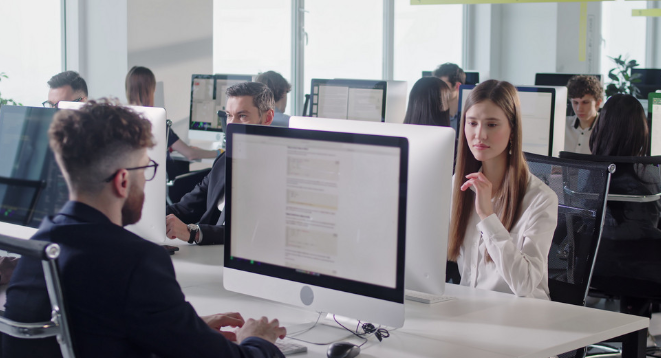
The traditional office is changing. Businesses are reconsidering how workplaces are designed, where employees work, and what commercial spaces need to provide in a changing business environment. Rather than treating an office as simply a collection of desks and conference rooms, many companies are placing greater emphasis on flexibility, employee comfort, productivity, and long-term value. These shifts are influencing everything from office furniture and construction to the way businesses evaluate commercial real estate.
Office Construction Remains a Major Part of Commercial Development
Despite ongoing changes in how people work, office construction continues to represent a significant portion of commercial development. Companies still need spaces that support collaboration, client interactions, meetings, and day-to-day operations. However, the design of these spaces may look different from the traditional office layouts of the past.
According to Mordor Intelligence, office construction accounted for 35.10% of commercial-sector construction in 2025, giving it the largest share among commercial sector types. At the same time, industrial and logistics construction is expected to be the fastest-growing segment, with a 5.44% compound annual growth rate through 2031.
These trends demonstrate that commercial construction is responding to changing business needs. While office development remains a major part of the market, companies and developers are also adapting to growth in areas such as logistics, distribution, and industrial operations.
For office businesses, this may mean greater attention to adaptable spaces. A workplace may need to accommodate a combination of private work, group collaboration, hybrid meetings, and employee-focused amenities. Rather than building an office around one fixed way of working, businesses may increasingly seek spaces that can evolve with their needs.
Office Space Is Becoming a More Valuable Investment
Businesses are also rethinking traditional offices because commercial real estate represents a significant financial investment. The cost of acquiring office space can affect business decisions for years, making location, layout, condition, and future usability important considerations.
According to Crexi, the average sale price for office properties reached $177.14 per square foot in October 2025, representing a 13.38% increase compared with the previous year.
This increase highlights the importance of evaluating office space carefully. Businesses purchasing or developing property may need to think beyond their immediate needs and consider how the space could serve them in the future. A poorly designed office may become difficult or expensive to adapt, while a flexible property may provide greater long-term value.
The same principle applies to businesses considering renovations. Updating an office can involve more than making the space look modern. Improvements to lighting, layout, technology infrastructure, meeting areas, and employee workstations may help create a more functional environment.
Companies may also need to consider how an office supports recruitment and retention. A comfortable, attractive, and well-equipped workplace can contribute to the overall employee experience.
Employee Comfort Is Changing Office Design
One of the clearest ways offices are evolving is through greater attention to employee comfort. Traditional office furniture often prioritized fitting as many workstations as possible into a limited area. Today, businesses are increasingly considering how furniture and workstation design affect employees throughout the workday.
According to Statista, demand for ergonomically designed cubicles and office furniture in the United States has grown by 35% over the past five years.
Ergonomic design can include adjustable desks, supportive chairs, monitor positioning, keyboard placement, and workstations designed to accommodate different users. These features can help employees create more comfortable work environments and may make it easier to maintain healthy working positions throughout the day.
The increased focus on ergonomics reflects a broader shift in workplace priorities. Employees spend significant amounts of time at their workstations, so furniture can have a meaningful effect on their daily experience. Businesses may therefore view ergonomic upgrades as an investment in both comfort and workplace functionality.
Modern office design may also incorporate a variety of work settings. Employees might have access to traditional desks, private areas for focused work, collaborative spaces for group projects, and comfortable areas for informal discussions. This approach can provide more flexibility than a uniform office filled with identical cubicles.
Flexibility Is Becoming a Core Office Priority
The modern office needs to accommodate changing expectations. Some employees may work primarily in person, while others may split their time between home and the workplace. Meetings may involve a combination of people in the office and remote participants. Businesses may also grow, reorganize, or change how teams use their space.
For these reasons, flexibility is becoming increasingly important in office planning. Movable furniture, adaptable conference rooms, modular workstations, and technology-ready meeting areas can make it easier for businesses to adjust without completely redesigning their offices.
Flexible design can also help companies make better use of available space. Instead of assigning every employee a permanent workstation, some businesses may create shared or multi-purpose areas. The right approach depends on the organization’s workforce, industry, culture, and operational needs.
The Office of the Future May Be More Intentional
Rethinking the traditional office does not necessarily mean eliminating the office. Instead, it means considering what a workplace should accomplish and how its design can support those goals.
Businesses are balancing construction trends, real estate costs, employee expectations, and changing work patterns. The result is a growing focus on offices that are adaptable, comfortable, functional, and designed with long-term needs in mind.
The traditional office may not disappear, but it is clearly evolving. Companies that approach office design thoughtfully can create spaces that better support their employees and operations while making more strategic use of valuable commercial property.