
Most people call a pest control company the same way they call a plumber, only after something has gone wrong. A trail of ants across the kitchen counter, a roach darting under the refrigerator, a wasp nest discovered too late. The problem gets treated, the truck drives away, and everyone moves on until the next surprise.
That reactive approach works, but it costs more and solves less than an ongoing relationship does. Here’s why staying connected with a pest control provider pays off long after the initial treatment.
Pests Don’t Operate on a One-Time Schedule
Infestations aren’t isolated events. They’re the visible result of conditions that built up over weeks or months, and those conditions rarely disappear on their own after a single service call.
Moisture near a foundation, a gap in weatherstripping, mulch stacked against siding, a tree limb brushing the roofline: any of these can invite a return visit from the same population. One-time treatments address what’s present today. Ongoing service addresses why it showed up in the first place.
A technician servicing the same property on a recurring schedule builds a working history of it. Which corner of the crawlspace stays damp in July, which entry point caused trouble two springs ago, which side of the house sees the most pressure. That accumulated knowledge simply doesn’t exist when every visit starts from scratch.
Correct Identification Changes the Entire Treatment Plan
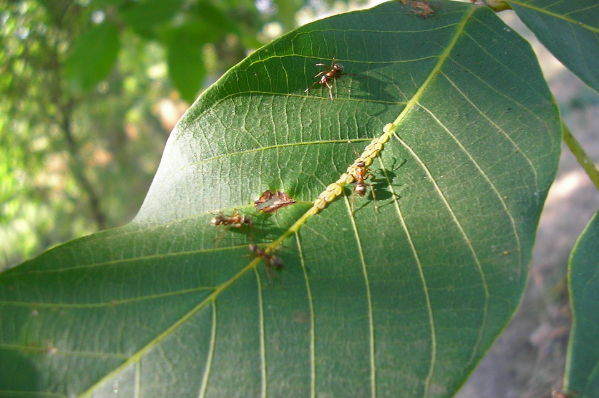
Ants are by far one of the most common insects in the Carolinas, and sometimes it can feel like the Charlotte area has more than its fair share. However, with over 12,000 known ant species, identifying a particular one can be difficult.
That difficulty matters more than most homeowners expect. Carpenter ants, odorous house ants, fire ants, and pavement ants all respond to different baits, different placement strategies, and different timing. A product that works beautifully on one species can actively worsen a problem with another by triggering colony budding, where a single nest splits into several.
Guessing wrong wastes months. This is where an established professional relationship earns its keep, because accurate identification is a skill built through repetition. A technician who has encountered these species across the same neighborhoods over many seasons develops pattern recognition that shortens the path to a solution considerably.
Some Pests Have Had a Very Long Time to Adapt
It’s easy to underestimate what homeowners are dealing with. Ants’ roots trace back to around 100 million years ago, which means these insects have spent an almost incomprehensible stretch of time refining their ability to find food, establish colonies, and survive disruption.
Colony structures that route around damage, chemical trail systems that recruit reinforcements within minutes, satellite nests that survive when a primary nest is destroyed: none of this is accidental. It’s the product of an enormously long evolutionary run.
Homeowners aren’t outmatched, but they are up against something well-practiced. Store-bought sprays kill the ants that are visible while leaving the colony intact, and they often prompt it to relocate deeper into the structure. Sustained professional treatment accounts for how these populations actually behave, not just how they appear on the countertop.
Ongoing Service Catches Problems While They’re Still Small
There are about 4,600 species of cockroaches worldwide, and only about 30 of them are known to live around humans. That small subset causes an outsized amount of trouble, largely because they’re skilled at staying hidden until populations are well established.
By the time roaches are visible during daylight hours, the problem is usually further along than the homeowner realizes. Regular inspections catch early indicators, including droppings in cabinet corners, egg casings behind appliances, and activity in the specific harborage points these species prefer.
The same principle applies across the board. Termite damage discovered during a routine inspection is a manageable repair. Termite damage discovered during a home sale is a negotiation problem with real financial consequences. Rodent activity caught early is a sealing job. Caught late, it involves insulation replacement and sanitizing.
Protecting Property Value and Peace of Mind
An established service history carries practical value beyond the pests themselves. Documented treatment records help during real estate transactions, satisfy some insurance requirements, and demonstrate that a property has been maintained responsibly.
There’s also a quieter benefit. Homeowners on regular service simply stop thinking about pests. The seasonal calendar, the entry points, the vulnerable spots, the treatment timing: all of it becomes someone else’s responsibility to track. That mental relief is difficult to quantify but easy to appreciate.
What the Relationship Looks Like in Practice
It typically starts with a thorough inspection that establishes a baseline, identifies existing activity, and flags conditions likely to cause problems later. From there, a treatment schedule gets built around the specific property, its surroundings, and the seasons when local pressure peaks.
Communication matters throughout. Homeowners who mention what they’re noticing, even small things that seem insignificant, give their technician the information needed to adjust the plan before minor issues escalate.
Handling pest problems one emergency at a time will always be an option. It’s just rarely the cheaper or more effective one.