Planting a young tree is an investment that can enhance a home’s landscape for years to come. But trees need more than water, sunlight, and room to grow. Proper pruning during their early years can help shape their structure and address problems before branches become larger and harder to manage. Knowing when young trees need attention can help homeowners support healthy growth while avoiding unnecessary trimming.
Why Early Pruning Matters
Young trees are still developing their permanent branch structure. During this stage, selective pruning can help direct growth and remove branches that may create structural problems later. Dead, damaged, crossing, or poorly positioned branches can become more difficult to address as the tree grows.
Pruning can also help maintain a balanced appearance. However, removing too much growth can be harmful, particularly when a tree is still establishing itself. The objective isn’t to cut a young tree into a specific shape but to address growth that could create problems as the tree matures.
Building Strong Branch Structure
Early pruning can have long-term benefits for a tree’s development. According to the Home & Garden Information Center, pruning young trees every two to three years can encourage a stronger branch structure and reduce the need for corrective pruning later.
This preventive approach can make future maintenance more manageable. A small branch that’s growing at an undesirable angle may be relatively simple to remove when the tree is young. If that same branch becomes a large limb, removal can become more difficult and may leave a larger wound.
Homeowners should look for branches that rub together, compete with the main leader, or have weak connections to the trunk. Addressing these concerns early can help the tree develop a more stable structure.
How Often Should Young Trees Be Pruned?
There’s no single pruning schedule that applies to every tree. Species, growth rate, location, health, and environmental conditions can all influence how frequently maintenance is needed. A young tree growing rapidly may require different attention than a slower-growing species.
Rather than pruning simply because a certain amount of time has passed, homeowners can inspect their trees regularly. Look for dead or damaged branches, unusual growth, and limbs that may eventually interfere with structures or other landscape features.
What Size Will Your Tree Become?
One reason early tree care matters is that a small tree can eventually become a substantial landscape feature. Homeowners may underestimate how much space a young tree will occupy as it matures, particularly when choosing trees for smaller properties.
According to the Arbor Day Foundation, trees between 30 and 70 feet tall are considered medium-sized. A tree that appears relatively manageable when planted may eventually have branches extending much farther across the property.
Planning for Mature Growth
Considering a tree’s eventual size can help homeowners make better decisions about planting and maintenance. Branches that are several feet away from a house when a tree is young may eventually grow toward the roof or other structures.
Pruning can’t compensate for every poor planting location. If a tree is planted too close to a building, driveway, sidewalk, or utility line, future growth can create challenges even with regular maintenance.
When planting a new tree, consider both its current appearance and its expected mature size. Giving it sufficient room from the beginning can reduce conflicts as the tree grows.
What Can Happen Without Regular Maintenance?
Young trees don’t necessarily become unhealthy simply because they’ve gone without pruning. However, allowing structural problems to develop can make future maintenance more difficult. As branches become larger and heavier, correcting their growth may require more extensive work.
Branches that cross or rub against one another can create damaged areas where pests or disease may gain entry. Dead branches can also become hazards if they break and fall unexpectedly. Growth that extends toward structures may eventually contact roofs, siding, fences, or other property features.
Professional Tree Care Is Growing
Homeowners aren’t the only ones paying attention to tree maintenance. Demand for professional tree care services continues to contribute to growth within the industry.
According to IBISWorld, tree trimming industry revenue is projected to reach $43.7 billion by 2030, with a compound annual growth rate of 2.1% during that period. This growth reflects continued demand for services that help homeowners and property managers maintain trees safely.
When Professional Help Makes Sense
Some small pruning tasks may be manageable for homeowners who have the appropriate knowledge and equipment. Larger trees and heavier branches can present different challenges, particularly when limbs are near buildings, roads, or utility lines.
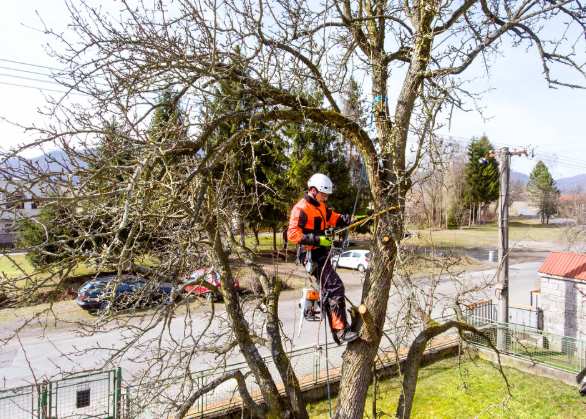
Professional tree care may be especially valuable when pruning requires climbing or specialized equipment. A qualified professional can also assess the tree’s overall structure and identify concerns that may not be obvious from the ground.
For young trees, professional guidance can help homeowners determine which branches should be removed and which should be left to support healthy development. This can be particularly useful when a tree has multiple leaders, unusual growth patterns, or existing damage.
Give Young Trees a Strong Start
Young trees can benefit from thoughtful maintenance throughout their development. Regular inspections and properly timed pruning can help establish stronger branch structures while addressing problems before they become more difficult to correct.
Homeowners should also consider the tree’s eventual size when planting and maintaining it. A young tree may look small today, but medium-sized trees can eventually reach 30 to 70 feet, making early planning important. By giving trees adequate space and addressing structural concerns as they develop, homeowners can support healthier growth and reduce the need for extensive corrective work later.